
 Español
 English
 Português
 Français
 Italiano
 Deutsch
 中文
 日本語
 한국어
 Русский
 Nederlands
 Svenska
 Norsk
 Íslenska
Learning · 3 min read
How long does it take to learn a language? What the hours say
The U.S. Foreign Service Institute estimates 600 to 2,200 class hours depending on the language. What those numbers mean, what they leave out and how to do your own math.
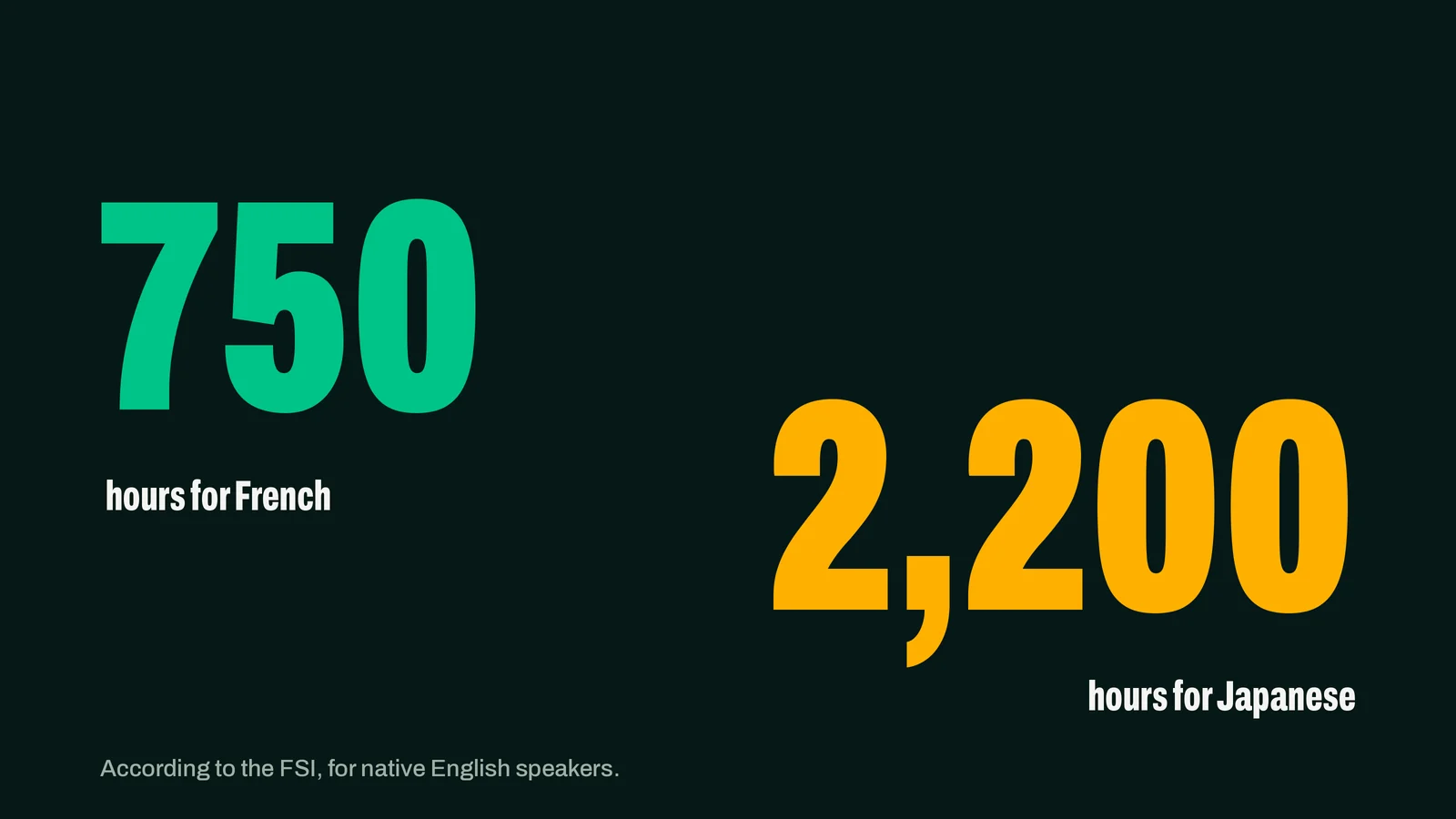
It's the question almost everyone asks before starting, and the honest answer is «it depends». But there is a fairly serious reference that puts numbers on it: the Foreign Service Institute (FSI), the language school of the U.S. diplomatic service.
The FSI has been teaching languages to diplomats for decades, and it publishes how much class time its students usually need to reach a level where they can work in the language.
The FSI numbers
The FSI groups languages by how far they are from English. These are its estimates for some of the most studied languages:
| Group | Languages (among others) | Class hours |
|---|---|---|
| Close to English | Spanish, Portuguese, French, Italian, Dutch, Swedish, Norwegian | 600 to 750 |
| A bit further | German | 900 |
| Hard | Russian, Icelandic | 1,100 |
| Super hard | Mandarin, Japanese, Korean | 2,200 |

Source: Foreign Service Institute, U.S. Department of State
Three things to know before you use these numbers
They're for native English speakers. If your first language is something else, the map changes. A Spanish speaker will find Portuguese and Italian far easier than someone from Ohio would. The closer a language is to the one you already speak, the fewer hours you need.
They're hours of intensive class. FSI students learn in small groups, several hours a day, plus homework. An hour of that does more than an hour of half-watching a screen.
The goal is high. This is professional level: working, negotiating and holding a conversation with ease. Travelling, introducing yourself or getting by in everyday conversation takes a lot less.
Do your own math
The nice thing about thinking in hours is that you can run the numbers at your own pace.
- 30 minutes a day, every day, adds up to about 180 hours a year.
- One hour a day is about 365 hours a year.
- Two hours a day is about 730.
That's why consistency wins. Half an hour a day for a year adds up to far more than one intense month followed by eleven quiet ones.
What actually speeds things up
- Speaking from day one. If you only read and listen, you'll understand a lot and say little. Hours spent producing the language out loud count double.
- Reviewing at the right moment. Reviewing a word just before you'd forget it locks it in better than going over it ten times in one day. That's called spaced repetition.
- A little, every day. Your brain consolidates what you learned between sessions. Seven 15-minute sessions beat one of almost two hours.
- Learning what you'll use. Phrases from your job, your plans and your hobbies stick faster than a generic word list.
So, how long will it take you?
If your goal is comfortable conversation in a language close to yours and you give it half an hour a day, think one or two years, not three months. For a distant language like Japanese or Korean, think several years. Either way, you'll be using it long before you're «done».
Colibrí is built to make those hours count: short spoken lessons with an AI tutor, spaced review of your own mistakes and a path from A1 to C1. A few minutes a day, speaking.
Keep reading
-
Fun facts
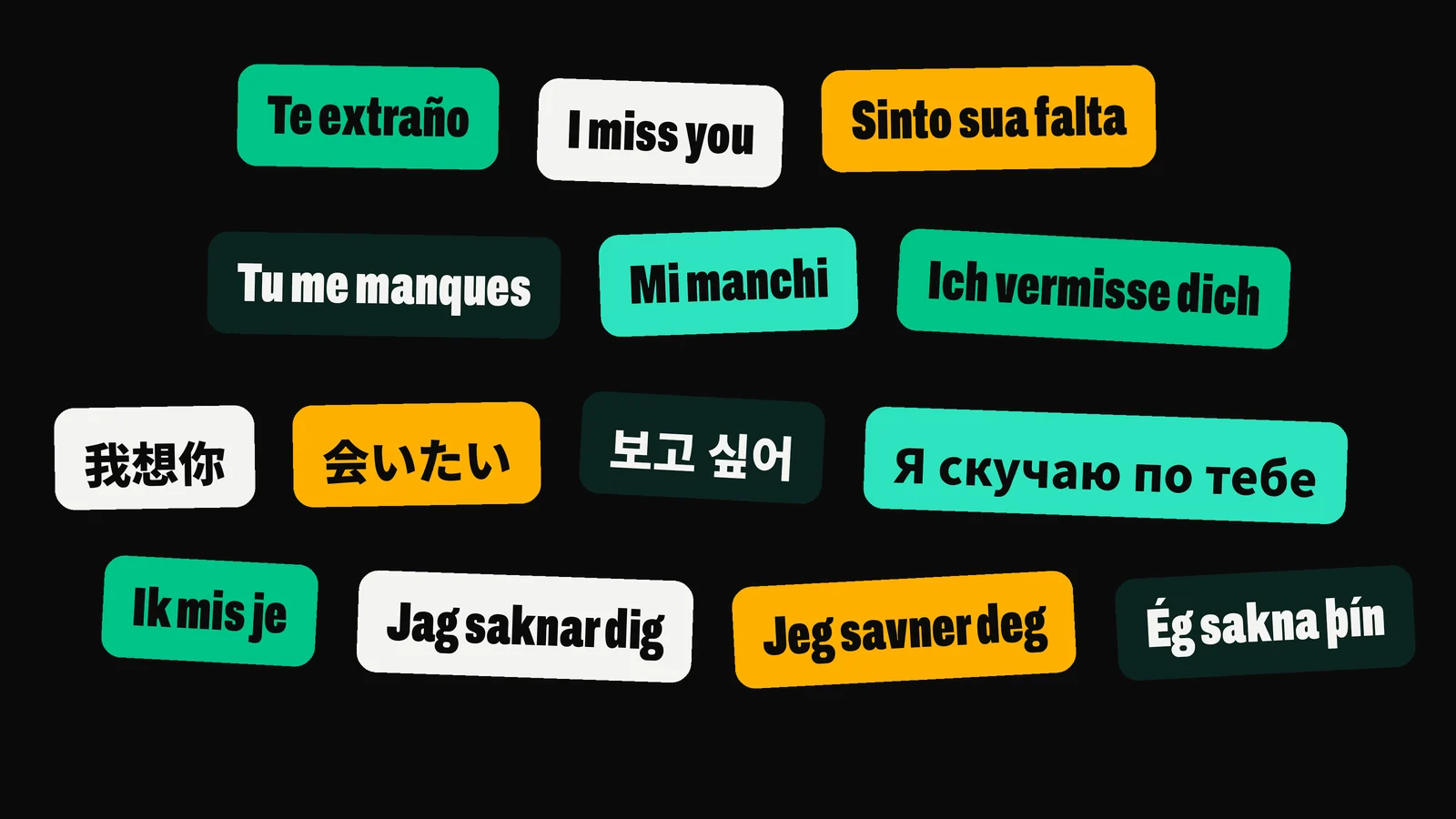
How to say «I miss you» in other languages, and what it really means
In French the other person is missing from you, in Japanese and Korean you want to see them, and in Russian you're bored without them. «I miss you» in fourteen languages, word by word.
Read -
Speaking
Why you understand a language but can't speak it
Understanding and speaking are different skills. Here is why you freeze when it's your turn to talk, five habits that help, and a two-minute exercise for today.
Read